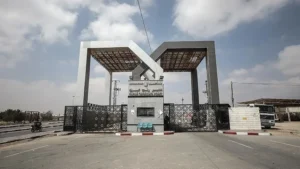
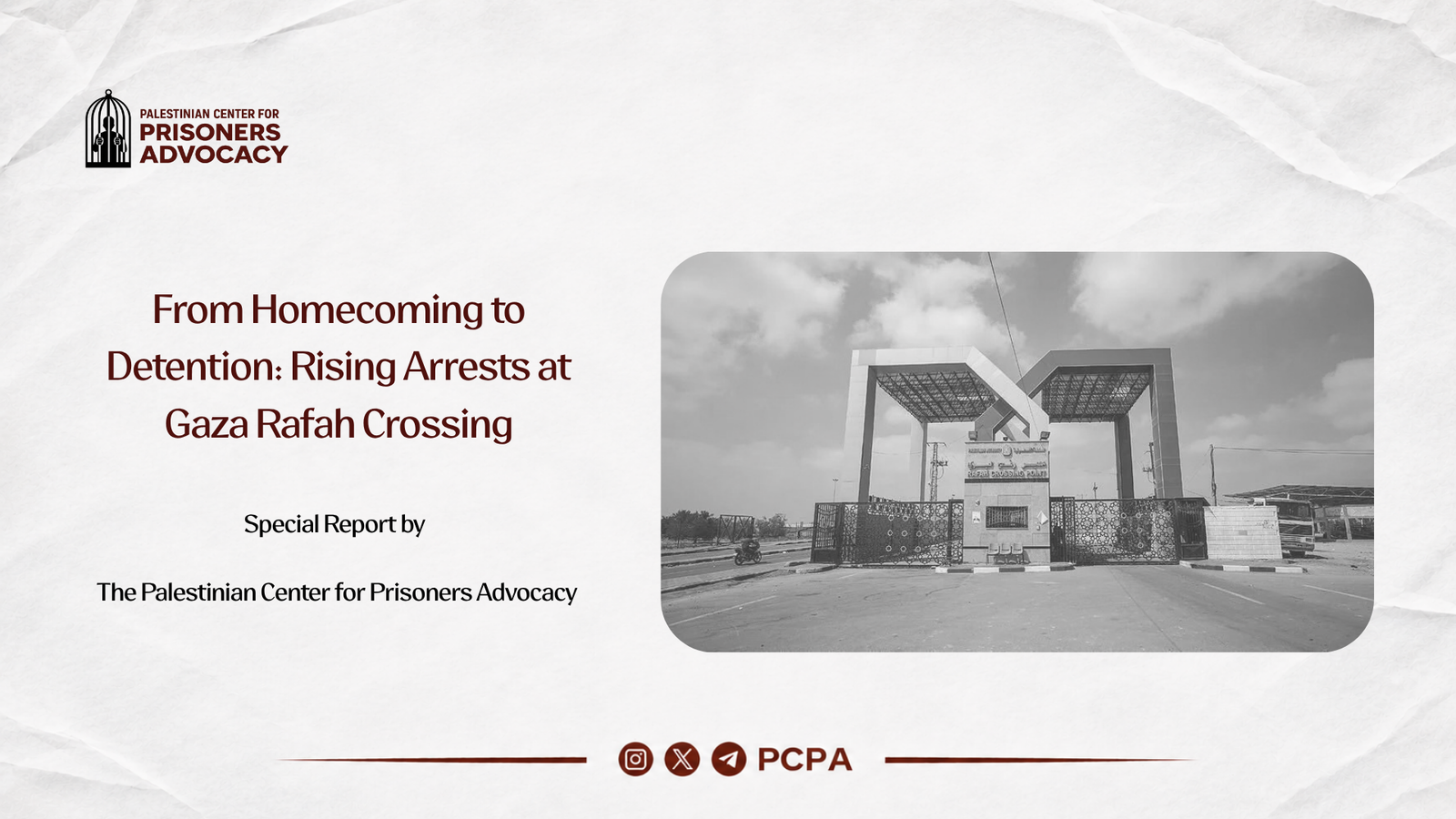
The journey back to the Gaza Strip through the Rafah border crossing no longer necessarily ends with a family reunion or a return home. The crossing, which thousands of Palestinians have awaited as a gateway home after displacement, medical treatment abroad, or years away, has become associated with a series of arrests carried out by Israeli forces against Palestinians attempting to return. This development raises serious concerns that detention is becoming a recurring practice accompanying travel and return movements.
In the latest incident, Israeli forces arrested Mohammed Lobbed, 36, on Tuesday, Nov. 3, 2026, as he was returning to the Gaza Strip. His case adds to a series of arrests at Rafah crossing in recent days, reinforcing concerns that the crossing is becoming a recurring detention point for Palestinians returning to their homeland.
The arrest followed the detention of three other Palestinians as they returned to Gaza through Rafah crossing: Shukri Ghazal, Mohammed al-Najjar, and Mohammed Akilla. All three were arrested after arriving as part of the movement of returnees to the Strip, adding their names to a growing list of Palestinians whose journeys home ended in detention rather than a safe return to their families.
These arrests came days after Ahmed al-Shaer was detained while returning through the same crossing, and followed the arrest of Amal al-Rifi, 60, and her daughter Yasmin al-Rifi, 33, as they returned from medical treatment in Egypt.
Israeli authorities subsequently extended the detention of the mother and daughter until Dec. 3, 2026, and issued an order preventing them from meeting their lawyer. The decision has heightened concerns over their safety and interrogation conditions, particularly as their return followed a medical journey that should have ended with their reunion with family members rather than their transfer to interrogation and detention facilities.
These cases form part of a broader pattern previously documented by the Center, which recorded the arrest of seven Palestinians at the Rafah and Kerem Shalom crossings, including the two women, before the latest arrests were reported. The growing number of cases indicates that the issue extends beyond isolated incidents and underscores the urgent need to review the security procedures imposed on Palestinians during travel and return.
From a Gateway Home to a Point of Arrest
The seriousness of the recent arrests lies in their timing, location, and the nature of those targeted. Palestinians crossing Rafah are neither engaged in military confrontation nor entering a prohibited area. They are exercising their right to return to their land and homes after months or years of waiting outside the Gaza Strip.
The situation is particularly distressing for patients who were forced to leave Gaza to seek medical treatment, only to face the possibility of arrest upon returning. This transforms their medical journeys into another ordeal and places families before a painful dilemma: seeking necessary treatment outside Gaza while fearing what may await patients when they return.
These concerns are no longer limited to those already detained. They extend to thousands of Palestinians in Egypt and elsewhere who are awaiting an opportunity to return to Gaza. Repeated arrests, without clear safeguards or sufficient legal explanations, may discourage Palestinians from returning out of fear of interrogation, detention, or losing contact with their families.
The central concern, therefore, is not merely the number of detainees, but the possibility that these measures could become an established policy under which every returning Palestinian is exposed to suspicion and detention, gradually transforming civilian border crossings into points of security screening and arrest.
Searches, Humiliation, and Interrogation: What Happens During Crossing?
The arrests cannot be separated from concerns over the treatment of travelers at border crossings and the security procedures imposed on them, including extensive searches of luggage and personal belongings, interrogation, prolonged waiting periods, and the risk of humiliation, physical abuse, or treatment degrading to human dignity.
Reports concerning the confiscation of travelers’ luggage and personal belongings, and the failure to return these items to their owners, require serious and transparent investigations, particularly when the confiscated property includes money, mobile phones, medical supplies, or documents needed during travel and return. Search procedures must not become a means of seizing personal property or humiliating travelers.
Similarly, subjecting returnees to interrogation under coercive conditions, separating them from their companions, or preventing them from contacting their families raises serious human rights concerns, especially given the significant imbalance of power between civilians and the armed authorities controlling crossing procedures.
There is an urgent need for independent documentation of every case involving physical abuse, humiliation, or property confiscation, including identification of those responsible and a clear distinction between legitimate search procedures and violations affecting travelers’ safety and rights.
Rafah crossing is neither a prison nor an interrogation center. Crossing procedures must not become an additional punishment imposed on Palestinians simply for seeking to return to their homeland.
EU Mission: International Presence Raises Questions of Protection and Accountability
The repeated arrests at Rafah crossing raise serious questions for the European Union Border Assistance Mission operating there regarding its role in monitoring crossing procedures, its awareness of detention, interrogation, or degrading treatment experienced by travelers, and the measures it takes when violations occur.
Although the EU mission’s mandate primarily concerns monitoring, coordination, and technical assistance, and does not grant it direct executive authority to manage the crossing or prevent arrests, its presence as an international monitoring body carries professional and ethical responsibilities to document violations, raise them with the relevant authorities, and ensure they are not treated as matters beyond international concern.
What does the mission know about the recent arrests? Have its monitors recorded objections or observations regarding the detention of returnees? What measures have been taken to follow up on detainees’ whereabouts and ensure that they are not subjected to torture or other ill-treatment? Is there a clear mechanism through which travelers or their families can submit complaints concerning arrest, physical abuse, or confiscation of personal property?
Equally important is the European Union’s responsibility to clarify the safeguards governing the movement of returnees, disclose the nature of coordination concerning travelers subjected to detention, and assess the extent to which the parties involved comply with international standards governing freedom of movement and civilian safety.
The presence of international monitors at a crossing used by patients, wounded persons, women, older people, and Palestinians returning to their homes should contribute to greater transparency and accountability. It must not become a merely administrative presence whose practical impact remains unclear to civilians when they are arrested or lose contact with their families.
The Right to Return and Freedom of Movement Must Not Be Subject to Threats of Arrest
The cases of Palestinians detained at Rafah crossing raise legal concerns extending beyond individual detention conditions. The right of Palestinians to leave their country and return to it, as well as their rights to personal security and protection from arbitrary arrest, are fundamental rights that must not be undermined by open-ended security measures or procedures lacking legal oversight.
Crossing a border does not, in itself, constitute grounds for arrest. Even where security suspicions exist, the detaining authority remains obligated to explain the legal basis for detention, inform individuals of the reasons for their arrest, enable them to contact legal counsel and challenge the legality of their detention, and ensure protection against torture or degrading treatment.
The case of Amal al-Rifi and her daughter Yasmin illustrates an additional dimension of these risks. Their ordeal did not end with their arrest upon returning from medical treatment. Their detention was subsequently extended, and they were prevented from meeting their lawyer, placing them in a state of legal isolation and compounding the suffering of their family, which continues to await news of their safety.
The Palestinian Center for Prisoners Advocacy fears that such measures could become a permanent reality imposed on every Palestinian seeking to return to Gaza, turning arrival at the crossing into the beginning of a possible detention rather than the end of a journey. Such a development would effectively undermine freedom of return by making it conditional upon risks that civilians cannot predict or avoid.
From Rafah Crossing to Prison Cells: Concerns Beyond the Moment of Arrest
The risks surrounding these cases do not end when individuals are taken into custody at the crossing. Instead, their arrest marks the beginning of another period of uncertainty regarding their place of detention, the authorities responsible for interrogating them, their ability to communicate with lawyers and families, and the conditions they may face inside interrogation facilities and prisons.
These concerns are heightened by the conditions faced by detainees from the Gaza Strip since October 2023. Large numbers have remained isolated from their families and lawyers for prolonged periods, while Palestinian families continue searching for information about relatives arrested during the war, without receiving confirmed details regarding their whereabouts or health conditions.
Israel’s use of the so-called “Unlawful Combatants Law” to detain Palestinians from Gaza without criminal charges, while restricting lawyers’ access to them, has created additional concerns that newly arrested returnees could be transferred into detention procedures that make it difficult for their families to track their cases or obtain information about their situation.
The past three years have exposed extremely harsh conditions inside Israeli prisons and military detention facilities, including torture, starvation, beatings, medical neglect, solitary confinement, and denial of visits, alongside the continuing issue of forcibly disappeared detainees whose families have no information about their fate or places of detention.
Data from October 2026 indicate that approximately 9,265 Palestinian prisoners and detainees were held in Israeli prisons, including 3,101 administrative detainees and 1,419 individuals classified as “unlawful combatants.” The prison population also includes dozens of women and hundreds of children. These figures do not account for all detainees from Gaza held in military detention facilities.
Consequently, every new arrest at a border crossing raises broader concerns, particularly when accompanied by restrictions on access to lawyers or delays in disclosing detention locations, against the backdrop of continuing violations affecting thousands of Palestinian prisoners.
Urgent Responsibilities Before Arrests Become an Established Policy
The repeated arrests at Rafah crossing require action extending beyond demands for the release of individual detainees. They necessitate addressing the circumstances that allow these incidents to recur and establishing effective safeguards to prevent border crossings from being used as detention points against Palestinians traveling or returning home.
The Palestinian Center for Prisoners Advocacy calls for the release of Palestinians arrested while crossing without lawful grounds, the disclosure of their detention locations and interrogation conditions, and guarantees that they can meet their lawyers and communicate with their families. It also demands that detainees receive the necessary medical care, particularly patients and individuals returning from medical treatment abroad.
The Center further calls on the European Union Border Assistance Mission to provide public clarification of its role in monitoring these arrests and to establish an independent mechanism for receiving travelers’ complaints and documenting cases of physical abuse, humiliation, and property confiscation. Such measures must include guarantees that property seized without legal justification is returned and that those responsible for proven violations are held accountable.
International human rights and humanitarian organizations have a responsibility to monitor the conditions of newly detained Palestinians, ensure that their whereabouts remain known and that they are not transferred to undisclosed detention facilities, and work to establish the fate of all forcibly disappeared detainees from Gaza. Israeli prisons and military detention facilities must also be opened to independent monitoring.
The Center concludes that the greatest danger lies not only in the arrests that have already occurred, but in the possibility that they will become a recurring practice, turning Rafah crossing into a trap for Palestinians returning to their homeland and confronting thousands of civilians with a devastating choice: remain outside Gaza or risk arrest upon returning.
A crossing that should reunite families after years of displacement and suffering must not become another gateway to prison, nor should a journey for medical treatment and return home end with the beginning of another ordeal of detention and enforced disappearance.
Palestinian Center for Prisoners Advocacy
Nov. 4, 2026