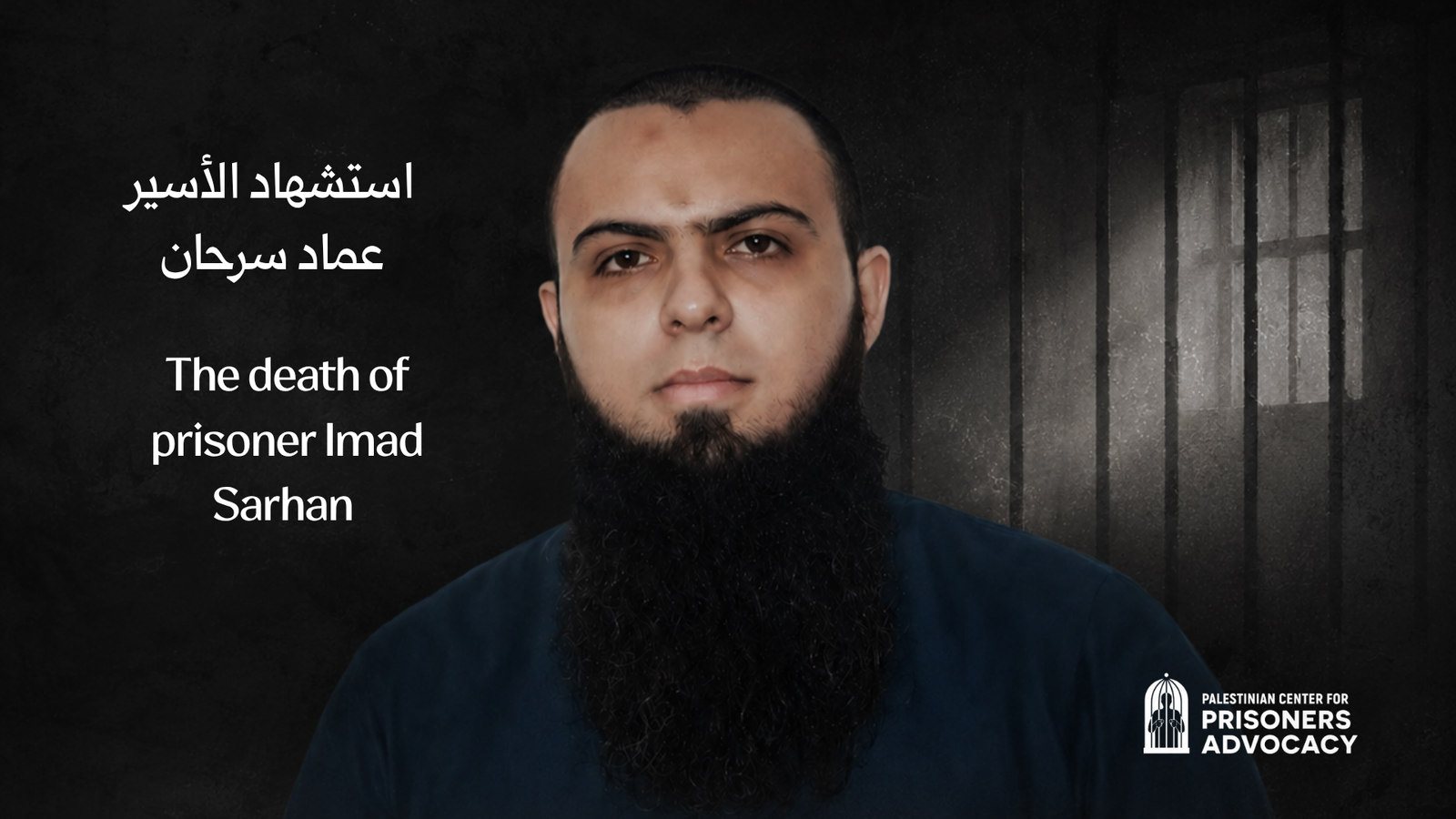
We condemn the death of the prisoner Imad Sarhan, 48, from the city of Haifa, inside Gilboa Prison. His death came after more than twenty-four years of detention and represents further evidence of the dangerous conditions experienced by Palestinian detainees inside the Israeli prisons, and of the escalating policy of systematic killing against them.
The prisoner Imad Sarhan, who had been detained since January 20, 2002 and was sentenced to life imprisonment plus ten years, was subjected throughout his long years of imprisonment to harsh policies, most notably solitary confinement, which lasted for many years, including four consecutive years, as one of the harshest punitive tools used by the prison administration against prisoners.
The death of prisoner Sarhan cannot be viewed as an isolated incident, but rather comes within an escalating pattern of violations against prisoners in recent times, amid an unprecedented deterioration in their health and humanitarian conditions, and the continued policies of isolation, medical neglect, and deprivation of basic rights.
The continued deaths of prisoners inside prisons signals an even more dangerous phase, especially with the escalation of acts of revenge and abuse against prisoners.The number of victims is likely to rise if the international community continues its state of helplessness and silence regarding what Palestinian detainees are being subjected to.
The international silence toward the crimes committed inside Israeli prisons, and the failure to provide the necessary protection for prisoners, places international and humanitarian institutions before a moral and legal responsibility that requires urgent action, rather than merely issuing statements of concern and condemnation.
We call for the formation of independent international investigation committees to examine the circumstances of prisoners’ deaths inside detention centers, and to prosecute the Israeli officials involved in these crimes, considering them grave violations of international humanitarian law and the Geneva Conventions.
The Palestinian prisoners today face one of the harshest and most dangerous conditions, which requires serious and urgent international action before prisons turn into silent graves.
More than 9,500 Palestinian prisoners are held in Israeli prisons, including around 1,500 detainees suffering from serious, chronic, and life-threatening illnesses. During the past two years, more than 90 prisoners have died inside prisons as a result of medical neglect, violations, and continuous abuse, confirming that prisoners’ lives are threatened on a daily basis in the absence of protection and accountability.