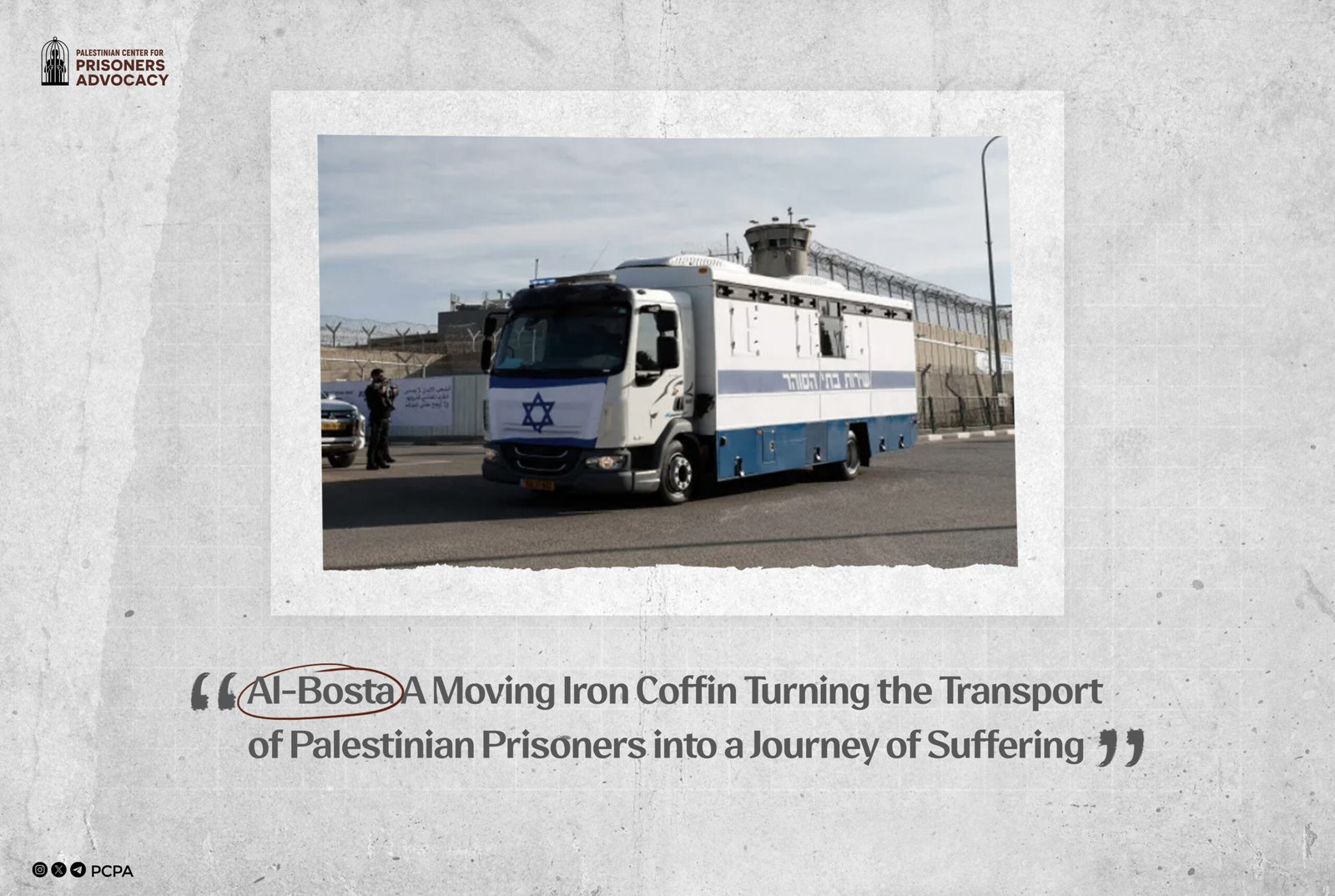
Palestinian prisoners in Israeli prisons live through daily, multifaceted suffering. One of the harshest and most painful experiences for them is what is known as the “bosta”, the vehicle used by the prison administration to transport prisoners between prisons, to courts, or to meet their lawyers. The Palestinian Center for Prisoners’ Advocacy states that this vehicle has, over time, turned into a real instrument of torture. Prisoners have even come to call it the “moving iron coffin” because of the severe physical and psychological suffering it causes.
The bosta vehicle consists of narrow metal compartments resembling small cells inside a completely enclosed vehicle. The prisoner sits on a hard metal chair in a very limited space that barely allows movement. During the entire transport period, the prisoner is restrained with metal handcuffs on both the hands and feet. These compartments contain no basic human facilities, only the iron chair and the shackles, although surveillance cameras inside the vehicle monitor the prisoners’ movements throughout the journey.
The bosta trip often turns into a long journey of pain and suffering. It can last many hours and sometimes exceed twenty-four continuous hours, especially when prisoners are transferred between distant prisons or taken to military courts. During this time, the prisoner remains shackled in a painful position and is not allowed to use the bathroom or stop in a humane manner to meet basic needs, which leads to extreme exhaustion and severe physical pain.
Prisoners also endure repeated and humiliating procedures during these trips. Each time the bosta stops, the prisoners are taken out and searched again despite the presence of surveillance cameras inside the vehicle. Prisoners view this as a measure intended more for humiliation and harassment than for security. At times, these procedures are accompanied by beatings, pushing, or harsh treatment during transport or inspection.
Although the prison administration primarily uses the bosta to transport prisoners to court sessions or to meet with lawyers, the severity of these journeys has led many prisoners to refuse leaving to meet their lawyers or attend court hearings in order to avoid what they describe as a journey of torture inside the vehicle.
The Palestinian Center for Prisoners’ Advocacy also notes that the danger of these conditions goes beyond daily suffering. Some prisoners have died during transport in bosta vehicles due to harsh conditions, mistreatment, and medical neglect, reflecting the level of risk prisoners face during these journeys.
The center emphasizes that what prisoners endure during transport in the bosta constitutes a blatant violation of humanitarian standards and international law. It calls on international human rights organizations to intervene urgently to stop these practices and ensure that prisoners are transported in humane conditions that respect their dignity and safety.