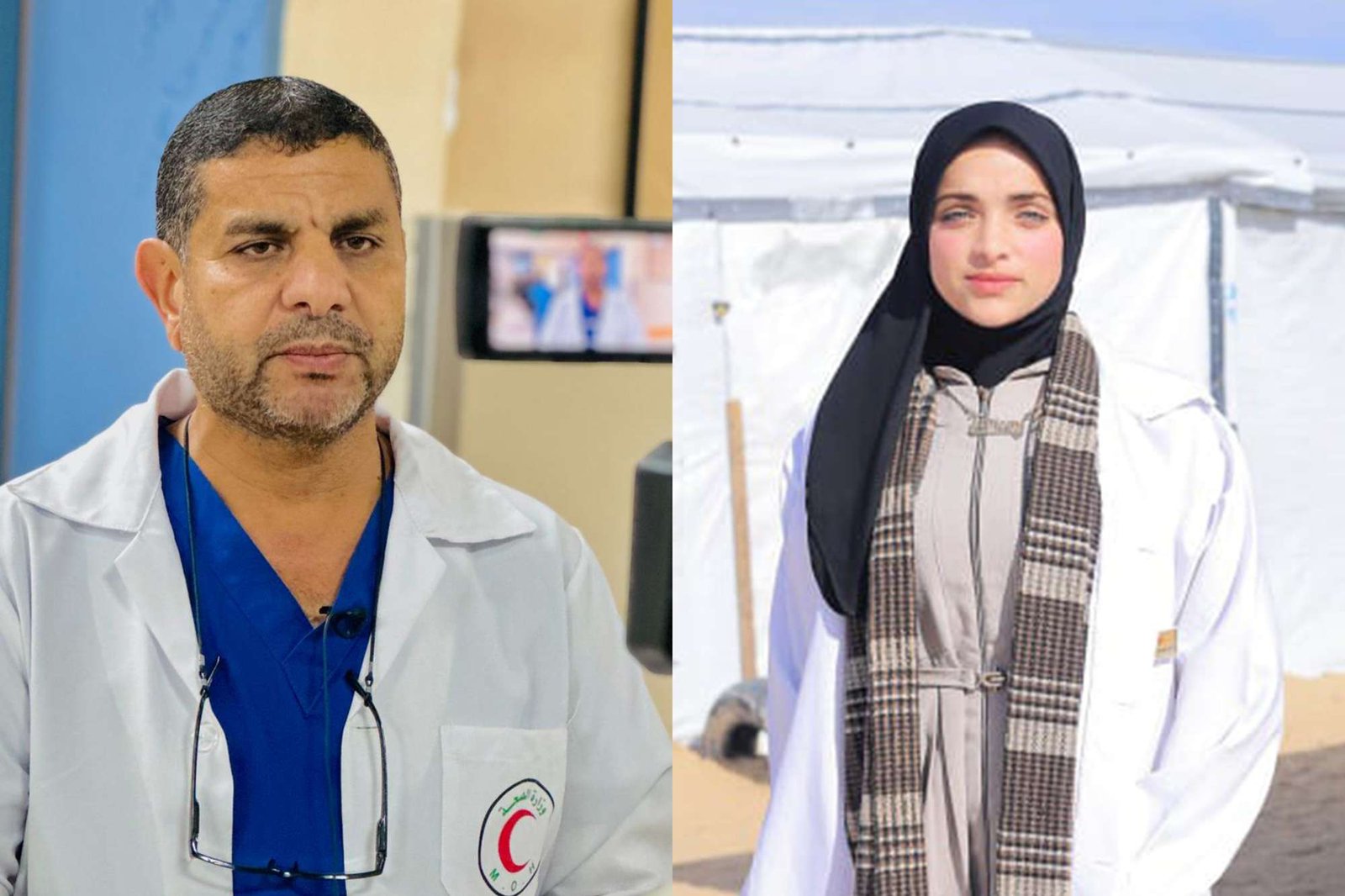
The Palestinian Center for Prisoners’ Advocacy documents the testimony of the released female prisoner, nurse Tasneem Marwan Al-Hams
In a new affidavit obtained by the Palestinian Center for Prisoners’ Advocacy, as part of its work documenting violations committed against Palestinian prisoners and detainees, the Center records the testimony of the released female prisoner, nurse Tasneem Marwan Al-Hams, as a direct account of the circumstances of her arrest and the detention, torture, and degrading treatment that accompanied it, according to her personal statement.
Tasneem Marwan Al-Hams, 24 years old, is a nurse from the city of Rafah in the southern Gaza Strip. She was kidnapped and detained despite her family already suffering from the arrest of her father, the doctor Marwan Al-Hams, who was abducted near the Mawasi area of Rafah. Al-Hams recounts her story in her own words, saying: “I am Tasneem, a young woman from Rafah, originally from Yibna. I am 24 years old and work as a nurse. I was living a very ordinary life before the war—studying, working, and having simple dreams. I never imagined that all of this could be taken away in a single moment.”
Al-Hams goes on to detail the circumstances of her arrest, explaining that it occurred while she was on her way to work at a medical point in Mawasi Khan Younis. A white vehicle of the type “Caddy” stopped near her. She says: “At first I didn’t pay attention, and suddenly I found seven people attacking me. One of them grabbed my hand, and I screamed: leave me alone, what do you want from me? They started insulting and beating me, then one of them pulled out a gun and fired next to my feet, and everyone who was in the area fled.”
She continues her account, saying: “They threw a grenade near a nearby school to create chaos, then forced me into the car at gunpoint, with the weapon aimed at my head. My eyes were blindfolded, my hands tied, and I was forced to bend down at their feet. I was between two men, each of them pressing a pistol against my head, as if they were saying that my life was not my own.”
Tasneem notes that the kidnappers were shouting “Injury… injury” to clear the road, before handing her over to the occupation forces in an area under their control, where she was forced to kneel before they withdrew.
She recalls those moments by saying: “I thought of my mother, my sisters, and my father, and I feared for my mother more than I feared for myself. I heard Hebrew and walkie-talkies, so I realized I was in the hands of the occupation. I began to repeat prayers and prepared myself for death.”
The released detainee Al-Hams continues that a female soldier led her to a destroyed house filled with soldiers, vehicles, and tanks, while drones were hovering overhead. There, according to her testimony, she was subjected to a humiliating body search while nearly naked, before being shackled with painful iron restraints on her hands and feet. She was then transferred between several military sites until she was placed inside a black iron box that was almost devoid of oxygen.
She reports that the first interrogation began while she was inside that box, when a male interrogator and a female interrogator arrived and began questioning her. She says: “I said ‘al-hamdulillah’ without realizing it, maybe because I’m used to saying it. They asked me where I wanted to go, and I said to my family in Gaza, and they laughed. They asked me about the prison, and I said Ashkelon. The interrogator said: with your father. I fell silent.”
Tasneem explains that her transfer to Ashkelon prison marked the beginning of a harsh phase of detention. She was stripped of all her personal belongings, even her hair tie, and placed in a dark cell with no sunlight and no sense of time. She says: “For a full month I did not see daylight. The cold was in the walls and in my bones. I used to write my siblings’ names on the wall with my fingernail so I could feel that I was still human.”
She adds that the Shin Bet interrogation was long and brutal, involving insults, threats, false accusations, and sitting for long hours on a chair. She says: “They said I would stay for twenty years. They threatened my family. I became weak, my body went into spasms, and I cried until they took me in a wheelchair and gave me a sedative. After only two hours, they came back and said: interrogation.”
Speaking of the harshest moments of her detention, Tasneem says: “They took me into the interrogation room and I saw my father, Dr. Marwan Al-Hams, handcuffed to a chair. When he saw me, he cried… the mountain cried. I rushed toward him and hugged his neck and told him: don’t cry, my father. He kissed me and said: my beloved daughter. They screamed at us. I kissed his hand and his foot. They asked me to question him about things he did not know, and I told them: I believe my father.”
She adds: “I heard his voice saying that Palestine is above all of us. I left holding myself together, but after a few steps I collapsed. I felt as if my heart had split in two.”
She explains that her health condition later deteriorated. She lost her appetite and ten kilograms of weight, was transferred between several prisons, and was subjected to deception, beating, and humiliation, especially during transfers with the “Nahshon” unit, before reaching Damon prison where she met other female prisoners. She says: “The female prisoners embraced me and turned the prison into a school of steadfastness, but punishment, beatings, solitary confinement, and medical neglect never stopped.”
She mentions that she was later transferred to Ramle prison, where she fell after being pushed on the stairs, and lived in a cell full of insects and under camera surveillance even inside the toilet. She was then brought before the Lod court without a lawyer and faced false charges. She says: “I told the judge that I am innocent and that my father is innocent.”
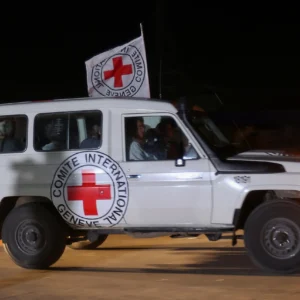
Al-Hams concludes her testimony by noting that her release came suddenly when the jailer called her at dawn. She was shackled and transferred to the Kerem Shalom crossing, where her restraints were removed and she was told: walk and don’t look back, before being handed over to the Red Cross. She says: “I hugged my family and cried. I was happy, but my happiness was incomplete. My father’s embrace was not there. My body was released, but my heart remained behind bars. My freedom will not be complete until the day my father returns home… until that day.”
It is worth noting that the number of Palestinian prisoners and detainees has reached, as of January of the current year, approximately 9,300 prisoners and detainees, including 1,300 sentenced prisoners. Among them are 51 female prisoners, 350 child detainees, 3,200 administrative detainees, and 1,250 detainees held under the Unlawful Combatant Law. All of these are from the Gaza Strip, detained after October 7, 2023, and are subjected to the most brutal forms of oppression and humiliation by Israeli jailers. Female prisoners suffer doubly due to unjust Israeli laws against them and the lack of adequate official and public attention to their conditions and circumstances of detention.