
The Palestinian Center for Prisoners Advocacy is closely following reports that the International Committee of the Red Cross may soon resume visits to Palestinian prisoners held in Israeli detention facilities, after visits were suspended following the start of Israel’s genocide on Gaza on Oct 8, 2023. Dozens of detainees from the Gaza Strip had already been barred from receiving such visits even before that date.
Although the ICRC has yet to officially announce the resumption of visits, any return to this humanitarian role must be comprehensive and unrestricted. It should not be reduced to symbolic or limited visits that fail to address the crisis Palestinian prisoners and their families have endured over the past several years.
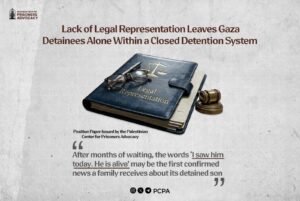
Priority must be given to determining the fate of all detainees, forcibly disappeared persons and those whose whereabouts remain unknown, particularly detainees from the Gaza Strip. Many families have spent extended periods without clear information about where their relatives are being held or their health conditions.
Access must extend to all places of detention without exception, including military camps, military facilities and any undeclared detention sites or locations beyond international oversight.
Visits cannot be limited to known prisons or to a small number of detainees. The ICRC’s role must include confidential, individual meetings with prisoners away from the presence or supervision of prison authorities, allowing independent assessment of their health and detention conditions.
These visits should also document allegations of torture, starvation, medical neglect, isolation and deprivation of basic rights. Since October 2023, the suspension of visits has left thousands of Palestinian prisoners without independent international humanitarian monitoring.
Detainees with medical conditions, prisoners held in isolation and female prisoners should be among the highest priorities. Many families continue to wait for information about their relatives, while several cases have emerged in which detainees were later found to have died in custody without their families being informed in a timely manner.
Establishing the names of detainees, their places of detention and their health conditions is therefore an urgent humanitarian matter that cannot be delayed.
The return of ICRC visits should also be the first step toward restoring family visits, particularly for families of detainees from the Gaza Strip, many of whom have been denied the ability to see or communicate directly with their relatives for years.
There can be no meaningful return to normal humanitarian work inside detention facilities while prisoners remain isolated from their families and mothers, spouses and children are unable to visit them or receive direct reassurance about their condition.
The ICRC should not accept arrangements that restrict its humanitarian mandate or turn its visits into a limited, monitored procedure. It must be allowed to reach all prisoners and detainees without exception, with particular attention to the sick and injured, children, female prisoners and detainees from Gaza.
Confidential interviews must be guaranteed, alongside meaningful follow-up on medical treatment, food, detention conditions and communication with families.
If visits resume, it will mark an important step after years of interruption. But it will not be enough unless it genuinely breaks the information blackout surrounding detention facilities, reveals the fate of those forcibly disappeared or whose whereabouts remain unknown, reaches every place of detention and restores prisoners’ right to communicate with their families.
The objective is not simply for the Red Cross to enter detention facilities. It is to restore its essential humanitarian role in protecting prisoners, documenting their conditions and ensuring they are not once again left beyond the eyes of the world.
Palestinian Center for Prisoners Advocacy
Sept. 8, 2026