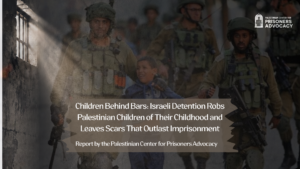
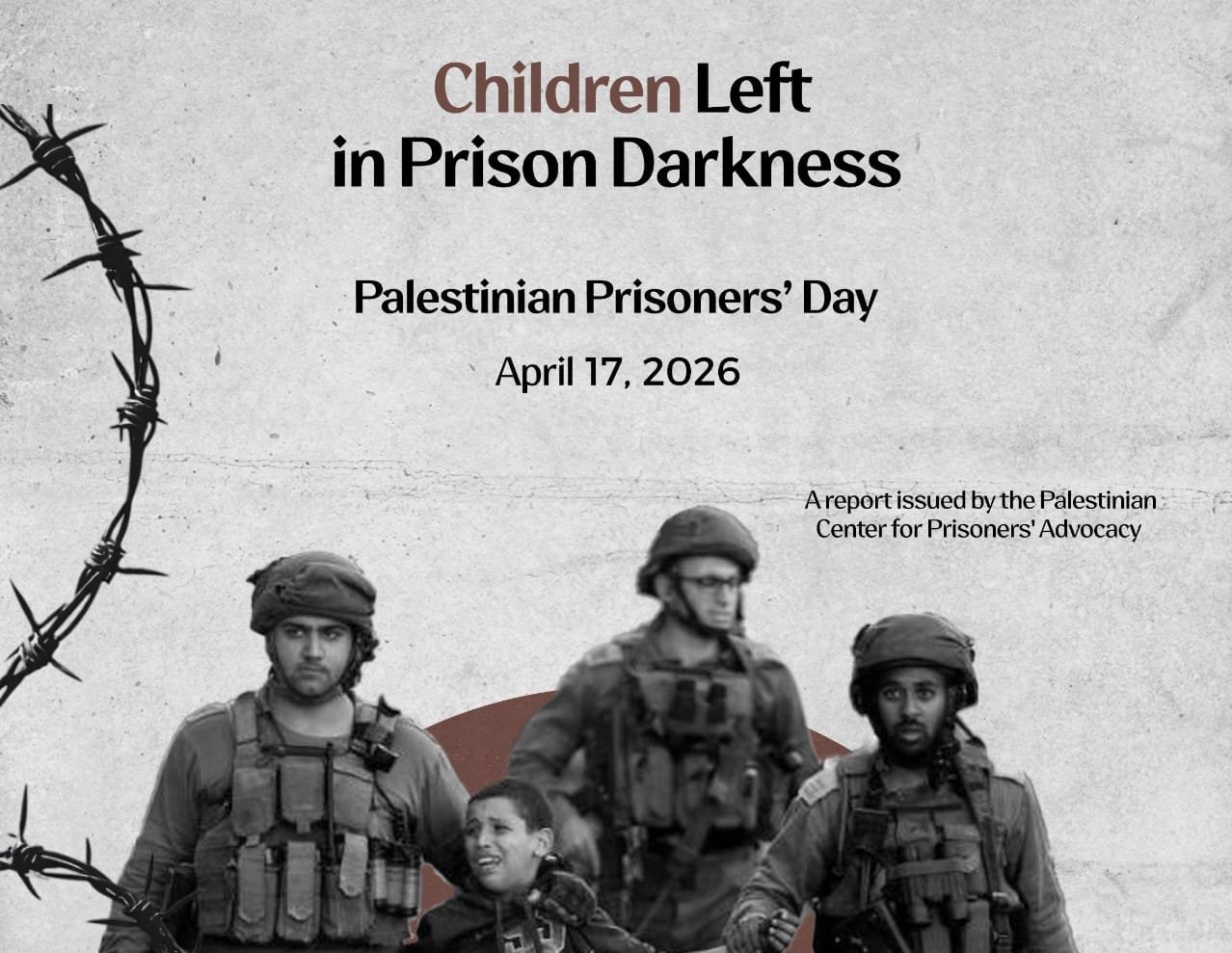
A special report issued by the Palestinian Center for Prisoners Advocacy on the occasion of Palestinian Prisoners’ Day, addressing the reality of Palestinian child detainees in Israeli prisons.
As April 17, Palestinian Prisoners’ Day, approaches, a harsher reality faced by Palestinian children in Israeli prisons becomes increasingly evident. There has been a continuous escalation in arrest and targeting policies that no longer exclude this age group, but rather directly and systematically affect them.
The Palestinian Center for Prisoners Advocacy documents the presence of approximately 350 Palestinian children in Israeli prisons, including 159 sentenced minors and around 90 held under administrative detention without charge. The rest face prolonged legal proceedings. These children are distributed across several detention centers, most notably Megiddo and Ofer prisons, under conditions that fail to consider their age-specific needs or basic rights.
These figures indicate a significant expansion in the detention of children in recent years. Since 1967, more than 55,500 cases of Palestinian child arrests have been recorded. Following October 2023, over 1,700 arrests were documented in the West Bank, in addition to the detention of dozens of children from the Gaza Strip under conditions marked by enforced disappearance and lack of information regarding many of their fates.
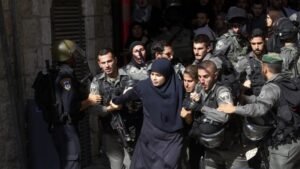
The arrest process often begins during early morning hours through violent home raids involving intimidation and assault, after which children are taken handcuffed and blindfolded. In this context, a child identified as “Q.N.” reported, according to a documented testimony, that he was beaten from the first moment of arrest and throughout transfers between multiple military points, before being held in an overcrowded section lacking basic necessities.
During transport and initial detention, children are often left for long hours without food or water in an environment dominated by fear and confusion, leaving immediate psychological impacts. This suffering deepens in interrogation centers, where children undergo lengthy questioning sessions without legal safeguards, are denied access to a lawyer or family members, and are subjected to pressure methods including isolation, sleep deprivation, and threats.
Documented Testimonies of Serious Violations
A child identified as “M.S.”, according to documentation by a human rights center, underwent weeks of interrogation before being transferred to a detention facility suffering from severe shortages in basic supplies, forcing him to sleep in inadequate conditions without consideration for his age or condition.
The center’s data also indicate that Israeli intelligence agencies rely on attempts of security and moral coercion against children, exploiting their young age and psychological vulnerability. This includes various forms of blackmail, such as threats or false promises of facilitation in exchange for cooperation, or the use of personal and family information to pressure them.
In some cases, psychological manipulation is used by creating an environment that gives the child a false sense of safety before exploiting it, in an attempt to break their will or extract information.
Another child, “A.Kh.”, confirmed in a documented testimony that his interrogation involved continuous restraint and sustained pressure, in addition to repeated raids on detention areas and direct use of violence.
Inside prisons, conditions become even harsher. Children are held in overcrowded rooms, with some forced to sleep on the floor, facing shortages in blankets, clothing, food, and water, along with strict restrictions on movement and bathing. In this context, a child “F.Sh.” from Gaza reported, according to a rights organization, that he was detained for a long period in a military facility under harsh conditions, with insufficient food, limited water, and severe movement restrictions, without any treatment acknowledging that he is a child.
Sick Children
The issue of sick children is among the most dangerous aspects of this reality. Many are denied necessary medical treatment or face long delays, with waiting lists for surgeries extending beyond a full year without guarantees. In many cases, only temporary painkillers are provided without proper diagnosis or follow-up, leading to worsening health conditions.
Children are also subjected to systematic starvation policies through reduced food quantities and poor quality, insufficient for their daily needs, causing gradual health deterioration, especially critical at this age. These conditions are exacerbated by ongoing medical neglect and lack of nutritional supplements and adequate care.
The center has documented the spread of skin diseases, such as scabies, among children due to poor hygiene and water shortages, alongside the absence of effective healthcare.
Suffering extends beyond prison walls, as children are often denied family visits for long periods or subjected to complex procedures that turn visits into an additional psychological burden. Even when visits occur, they are surrounded by strict restrictions, making them exhausting rather than supportive experiences.
In parallel, Israeli authorities continue expanding the policy of house arrest for children, particularly in occupied Jerusalem, where hundreds are forced to remain in their homes for extended periods. These homes effectively become detention spaces, depriving children of education and normal life, and leaving deep psychological and social impacts.
There is also a clear absence of specialized Palestinian institutions focused on child detainees, whether in terms of psychological support or legal follow-up. This leaves children facing the consequences of detention without sufficient rehabilitation programs, increasing long-term harm.
Psychological Impact of Child Detention
Data indicate cases of severe abuse against children during detention in closed environments lacking independent oversight, raising serious concerns about their physical and psychological safety. The Palestinian Center for Prisoners Advocacy highlights the deep and complex psychological effects of detention, which begin at the moment of arrest, accompanied by violence and intimidation, and extend beyond release.
Many children suffer from acute post-release disorders, including chronic anxiety, fear, loss of safety, stress episodes, nightmares, and sleep disturbances. Some also exhibit withdrawal, social isolation, and difficulty expressing emotions due to the psychological and physical pressures experienced in prisons and interrogation centers.
These conditions directly affect their daily behavior, making it difficult to build normal social relationships or regain trust in others. This hinders their reintegration into society, especially in environments lacking adequate psychological support. Without specialized intervention, these effects become long-term burdens impacting the child’s future and mental stability, with many struggling to move beyond the experience of detention.
Challenges in Continuing Education
After release, Palestinian child detainees face significant challenges in returning to education due to prolonged interruption during detention. This leads to clear knowledge gaps, making it difficult to keep up with curricula or reintegrate with peers.
Their psychological condition further affects concentration and comprehension, negatively impacting academic performance. Many feel alienated within the school environment due to the uniqueness of their experience and the additional psychological pressures it brings.
In some cases, this leads to school dropout or loss of motivation to continue education. Educational institutions often lack specialized programs to rehabilitate and gradually reintegrate these children, making their return to school a difficult and complex process requiring comprehensive support that remains largely unavailable.
In light of this, the Palestinian Center for Prisoners Advocacy affirms that the reality of detained children reflects an escalating level of violations affecting all stages of their lives, from the moment of arrest to conditions inside prisons, amid the absence of effective protection and the continuation of policies directly targeting this group. This places increased responsibility on Palestinian and human rights institutions to play an active role in addressing the consequences of the detention of thousands of Palestinian children.