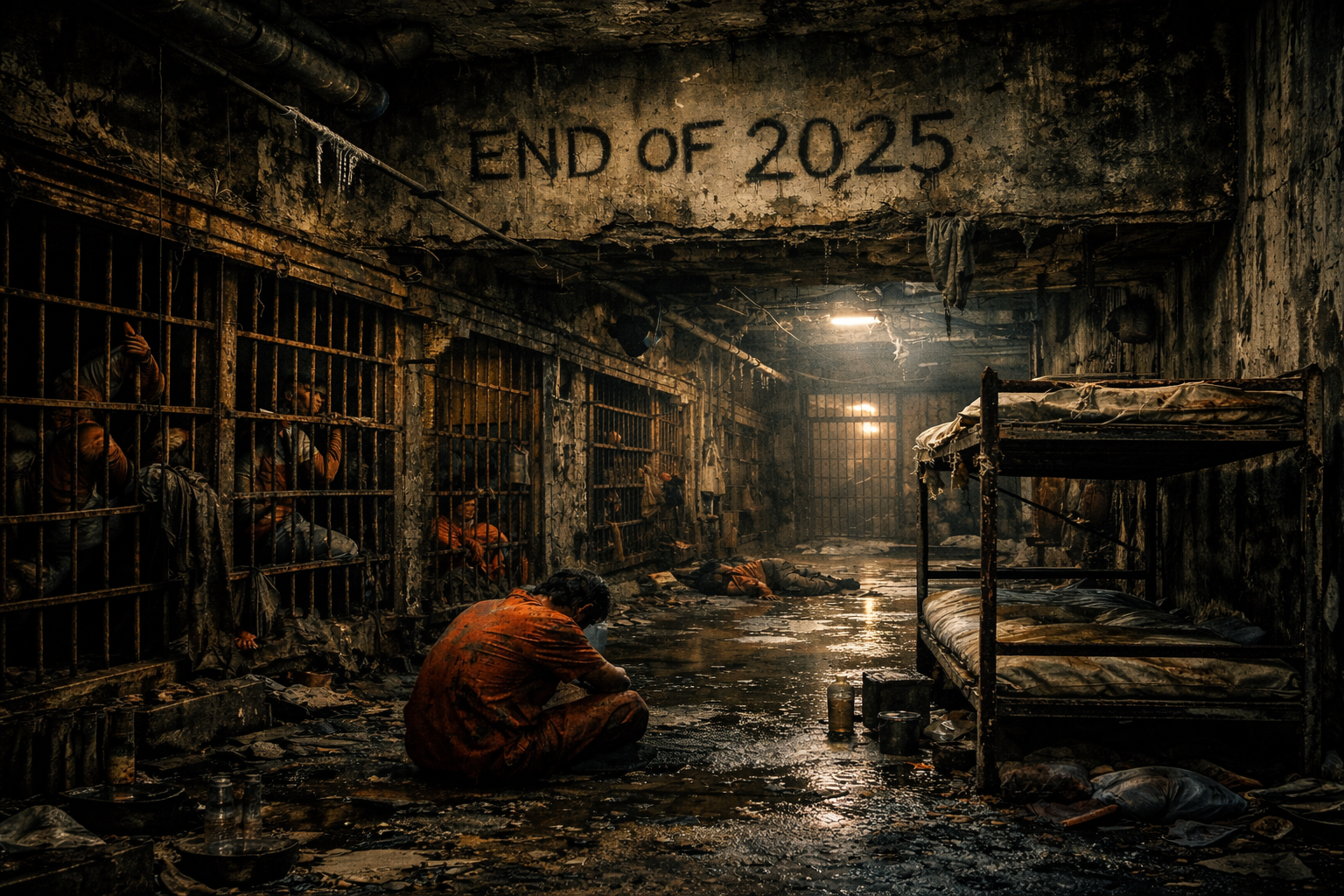
The year 2025 marked an unprecedented peak in the targeting of Palestinian prisoners, as Israeli authorities escalated arrest policies to exceptional levels and expanded repression to encompass all segments of Palestinian society. Amid an ongoing war and heightened security measures, prisons were transformed into an additional front within a broader system of collective punishment, according to documentation by the Palestinian Center for the Defense of Prisoners based on its media and field monitoring throughout the year.
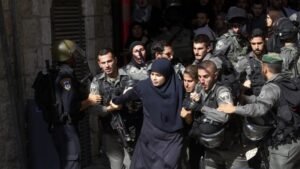
Arrest during 2025 was no longer an exceptional security measure but became an entrenched policy aimed at breaking and exhausting Palestinian society. The Palestinian Center for the Defense of Prisoners documented unprecedented overcrowding in prisons, sustained tightening of detention conditions, and a sharp deterioration in minimum humanitarian standards, amid international silence and an apparent inability to halt these violations.
According to data compiled by the Palestinian Center for the Defense of Prisoners through its monitoring of detainee files and partner organizations, the number of Palestinian prisoners and detainees held in Israeli prisons reached approximately 9,300 by the end of 2025, one of the highest figures recorded in years. These figures do not include thousands of detainees from the Gaza Strip held in military camps and detention facilities outside the formal prison system, which the center described as a grave violation of international humanitarian law.
The data indicate that about 1,250 prisoners are serving sentences of varying lengths, including lengthy and life sentences, while the majority of detainees are either held without trial or are pretrial detainees. This, the Palestinian Center for the Defense of Prisoners said, underscores the use of detention as a tool of political repression rather than a legitimate legal measure.
Administrative Detention
Administrative detention was the most dangerous tool of repression in 2025, with the number of administrative detainees reaching about 3,350 by the end of the year. These detainees are held under military orders based on secret files, without formal charges or fair trial guarantees, and with detention orders renewable indefinitely.
The Palestinian Center for the Defense of Prisoners said this form of detention constitutes a blatant violation of justice principles and turns deprivation of liberty into a prolonged form of collective punishment. It called for an immediate end to the policy, describing it as arbitrary detention prohibited under international law.
Children and Women
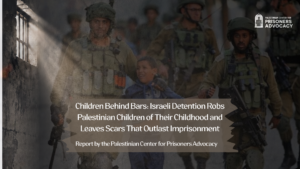
According to documentation by the Palestinian Center for the Defense of Prisoners, the number of Palestinian child prisoners reached about 350 by the end of 2025. Most were subjected to night raids, harsh interrogation, and denial of access to family members or lawyers during initial questioning, under conditions that failed to consider their age or psychological needs. The center said these practices violate the Convention on the Rights of the Child.
The center also documented the detention of 51 Palestinian women, including two minor girls below the legal age. Reports cited repeated instances of degrading searches, solitary confinement, medical neglect, and denial of family visits. The Palestinian Center for the Defense of Prisoners said these practices amount to cruel and inhuman treatment prohibited under international law.
Gaza Detainees
The Palestinian Center for the Defense of Prisoners said the detention of Palestinians from the Gaza Strip was among the most extensive and dangerous arrest files in 2025. Since the outbreak of the war, Israeli forces carried out mass arrest campaigns across Gaza, detaining thousands of people, including civilians, medical personnel, journalists, and individuals arrested from shelters or during displacement.
Israeli authorities acknowledge holding more than 1,200 detainees from Gaza inside Israeli prisons under the designation of unlawful combatants. The Palestinian Center for the Defense of Prisoners described this classification as a legal maneuver aimed at stripping detainees of international protection.
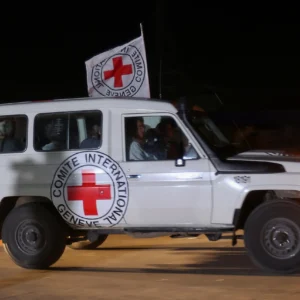
The center said the actual number of Gaza detainees is far higher than officially announced, with thousands still held in military camps and closed detention centers. Their names and locations have not been disclosed, and their families, lawyers, and the International Committee of the Red Cross have been denied access. The Palestinian Center for the Defense of Prisoners said these conditions constitute enforced disappearance.
Secret Prisons and Sde Teiman
The Palestinian Center for the Defense of Prisoners highlighted the increased use of secret prisons and military detention camps, particularly the Sde Teiman facility, which it said became one of the most dangerous sites of detention outside the law during 2024 and 2025.
According to documented testimonies from released detainees and reports by local and international human rights organizations, detainees at the facility were subjected to severe physical and psychological torture, starvation, denial of medical care, and prolonged shackling, in the absence of judicial or humanitarian oversight.
The Palestinian Center for the Defense of Prisoners previously documented serious sexual assaults inside the facility, including cases of rape and sexual torture that led to death. The center said these acts constitute grave violations of the Convention Against Torture and the Geneva Conventions and were not isolated incidents but occurred within a closed detention environment with the knowledge of responsible military authorities.
The center warned that continued detention in secret facilities and denial of contact with the outside world amount to an ongoing crime of enforced disappearance and said Israeli authorities bear full legal responsibility.
Prison Conditions and Deaths in Custody
According to the Palestinian Center for the Defense of Prisoners, conditions in Israeli prisons deteriorated sharply in 2025, including reduced and poor quality food, tighter daily restrictions, medical neglect, bans on visits, and the imposition of collective punishments. The center said these measures were aimed at breaking prisoners’ will and exerting psychological and physical pressure.
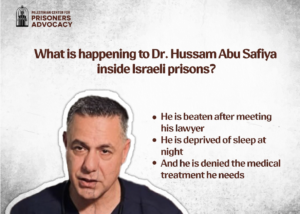
The Palestinian Center for the Defense of Prisoners also documented the deaths of Palestinian prisoners inside Israeli prisons during 2025 as a result of torture, deliberate medical neglect, and harsh detention conditions. It described these deaths as part of a continuing policy of slow killing inside prisons.
The center said these deaths constitute unlawful killings for which Israeli authorities bear full legal responsibility, citing the denial of medical care, the absence of independent and transparent investigations, and continued impunity.
Punitive Legislation
The Palestinian Center for the Defense of Prisoners said repressive policies in 2025 extended beyond prison practices into the legislative arena, with intensified efforts in the Israeli Knesset to pass what is known as the death penalty for prisoners law. The center said the initiative reflects an official shift toward harsher punishment and the entrenchment of retribution within the legal system.
The proposed legislation seeks to reinstate the death penalty for Palestinian prisoners convicted of killing Israelis and to grant courts broader authority to impose it. The Palestinian Center for the Defense of Prisoners warned this would represent a dangerous shift toward the legalization of judicial killing under the cover of law.
The center said the danger lies not only in the proposed law itself but in the context in which it is being advanced, alongside expanded administrative detention, weakened fair trial guarantees, reliance on confessions extracted under pressure, and the use of military courts as instruments of control. It said applying the death penalty under such conditions would constitute a grave violation of fundamental principles of justice.