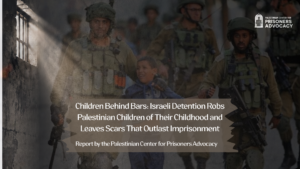
The detention of Palestinian children is one of the most serious violations carried out by Israeli occupation authorities against the Palestinian people. It constitutes a direct assault on a group protected under international law. For years, Palestinian children have been subjected to arrest, interrogation and detention under harsh conditions that leave long-term psychological and physical effects and directly undermine their educational and social futures.
This briefing sheds light on the situation of Palestinian children held in Israeli prisons by providing an overview of arrest policies, patterns of abuse against minors, and documented cases of child detentions from the occupied West Bank, occupied Jerusalem and the Gaza Strip. It also examines harsh interrogation practices and judicial procedures applied to children.
Number of Detained Children
Data from Palestinian and international human rights organizations indicate that Israeli authorities arrest hundreds of Palestinian children each year. More than 350 children are currently held in Israeli prisons, most of them from the West Bank, along with children from occupied Jerusalem. Arrests of children from the Gaza Strip have also been documented, particularly during periods of military escalation.
These figures reflect a dangerous escalation in the targeting of minors, as well as an increase in pretrial detention periods, in some cases without clear charges, in violation of the legal safeguards that should be afforded to children.
Reality of Palestinian Child Detention
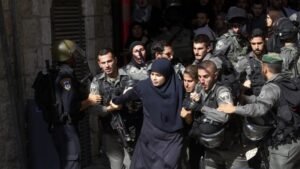
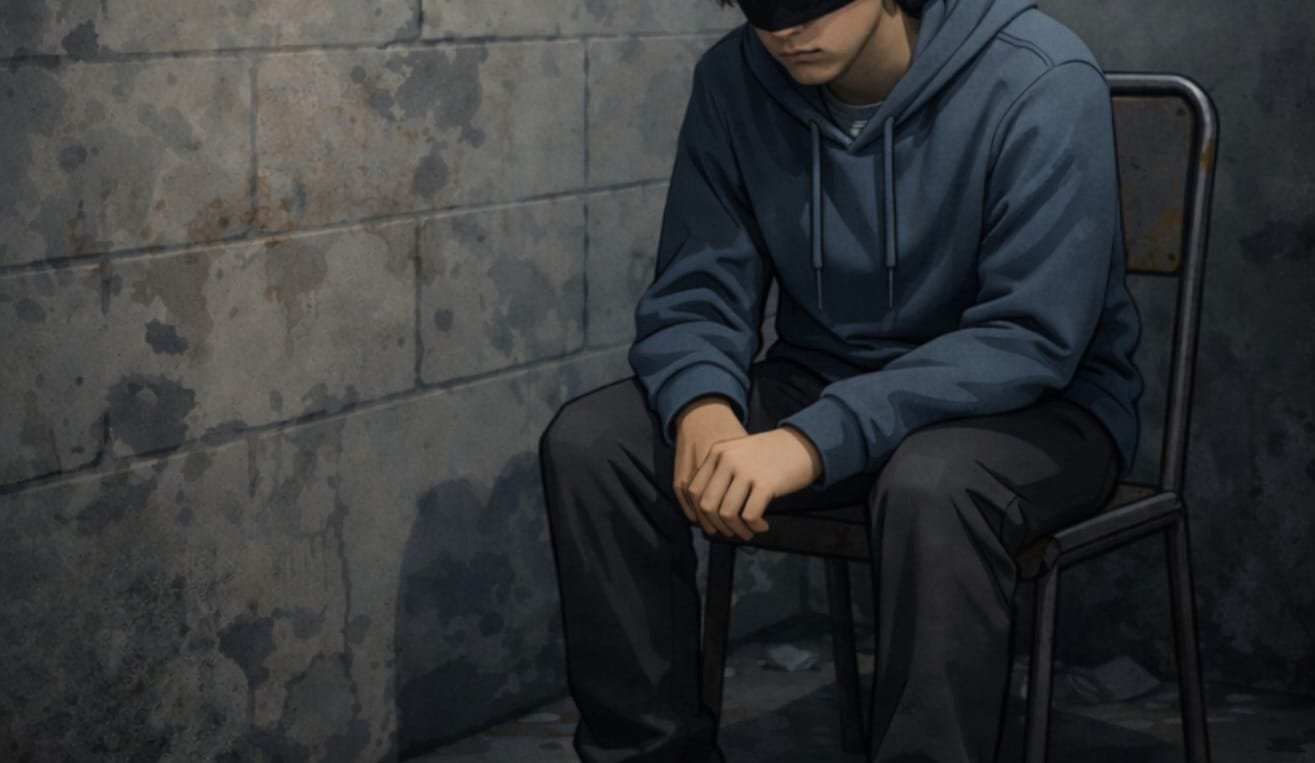
Israeli forces arrest hundreds of Palestinian children annually, with arrests often carried out during night raids on family homes. Homes are stormed, fear is spread among children and their families, and the child is then restrained, blindfolded and taken to interrogation centers.
Most children from the West Bank are tried before Israeli military courts, which operate within a judicial system that fails to account for the legal status of children and does not provide fair trial guarantees. In occupied Jerusalem, additional punitive measures are used, including house arrest, banishment and financial fines, turning a child’s daily life into a closed cycle of restrictions and surveillance.
In the Gaza Strip, despite difficulties in documentation due to war and siege, human rights and United Nations reports confirm that children were detained during military operations and held under harsh conditions before some were later released.
Harsh Interrogation and Detention Conditions
Detained Palestinian children are subjected to harsh interrogations that do not take into account their age or psychological vulnerability. Children are often interrogated for long hours under pressure, without the presence of a parent or a lawyer, and are subjected to threats and intimidation to extract confessions. In many cases, children are forced to sign written statements in a language they do not understand, which are later used as the basis for conviction.
Children are also held in detention conditions that fall far below humanitarian standards, including overcrowding, inadequate food, medical neglect and denial of education. These conditions leave deep psychological scars, including anxiety, fear and social withdrawal, which often persist after release.
Judicial Procedures Against Detained Children
The vast majority of children detained from the West Bank are brought before Israeli military courts, which rely on rapid and punitive procedures that do not adhere to child justice standards. These include prolonged pretrial detention, prison sentences or financial fines, and release conditions that impose heavy burdens on families.
In occupied Jerusalem, Israeli courts use alternative measures such as house arrest or banishment, which in practice amount to long-term punishment. These measures isolate the child from their natural environment, restrict their right to education and social life, and impose ongoing psychological and financial strain on families.
Among documented cases is that of Mohammed Zaher Ibrahim from the town of Silwad, north of Ramallah. He was arrested at age 15 during a nighttime raid on his family home and held for a prolonged period before trial, amid complaints of deteriorating physical and psychological health due to harsh detention conditions.
In occupied Jerusalem, official and media institutions documented the case of the minor Tuqa Ghazawi, who was arrested at age 12 and later released under severe conditions that included house arrest, banishment from her family home and a financial fine.
In the Gaza Strip, human rights organizations documented the case of Osama A., a 16-year-old from Gaza who was arrested during military operations and subjected to severe mistreatment during detention, including deprivation of food and medical care, before being released.
These cases reflect a recurring pattern of targeting Palestinian children for detention regardless of their location or circumstances.
Violations of International Law
Israeli practices against Palestinian children constitute a flagrant violation of international law, foremost among them the Convention on the Rights of the Child, which requires special protection for children, prohibits arbitrary deprivation of liberty and mandates treatment that preserves dignity and takes into account age and psychological needs.
These practices also violate the Fourth Geneva Convention, which prohibits the detention of civilians, particularly children, from occupied territory and their transfer into the territory of the occupying power, and obliges the occupying authority to provide special protection to children during armed conflict.
Conclusion
This briefing confirms that the detention of Palestinian children constitutes a systematic policy used as a tool of control and deterrence and stands in clear violation of the Convention on the Rights of the Child and international humanitarian law. It highlights that interrogation and trial systems applied to children fall well below minimum justice standards and leave deep psychological and social impacts on children and their families.
In this context, the palestinian center for prisoners advocacy renews its call for urgent international protection for Palestinian children, an end to the policy of arresting and prosecuting them, the immediate release of all children arbitrarily detained, and accountability for those responsible for violations committed against them.
Israeli authorities currently hold approximately 9,300 Palestinian detainees and prisoners in more than 27 prisons, detention centers and interrogation facilities, subjecting them to ongoing abusive practices. Among them are about 51 women prisoners and 350 detained children.